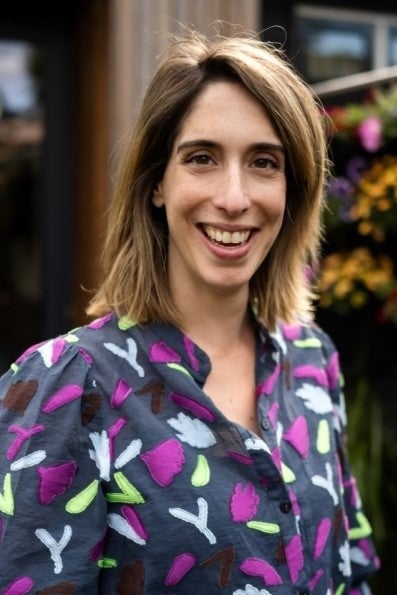
Marieke, like many teachers you suddenly saw ChatGPT appear in your courses and assignments. How did you first notice it?
“Well, like many colleagues, I use writing assignments in my courses. In Psychopathology and Prevention, for example, students have to make connections and translate those into a recommendation. But since generative AI became available, I saw that students simply pasted the assignment into ChatGPT and received a polished, detailed recommendation back. Convenient, yes, but it removes the entire learning process. And honestly, just saying ‘don’t use AI’ is pointless. It’s here to stay.�
So what did you do?
“I redesigned the assignment. For me, it’s about teaching students how to use AI consciously and critically. Now they first have to generate a paper with AI and then evaluate it themselves: what sources were used, how reliable are they, and how does the text relate to the required literature? Only then do they write their own recommendation. This way, they don’t blindly trust AI but learn to critically assess the value of its output.�
Some teachers say students have become lazy or irresponsible because of AI. Do you agree?
“No, I don’t think students are lazy or irresponsible. If you’re handed an out-of-jail-free card, of course you’re going to take the shortcut, right? Generative AI isn’t going anywhere. Developments are moving faster than we as teachers can keep up with. So banning it makes no sense.
Moreover, it would be a missed opportunity to just prohibit AI. If students learn to use it well, they’ll be better prepared, both in their studies and in their future careers. Our job as teachers is to show them that learning lies in the critical reflection.�
How did students respond when you turned their ‘shortcut’ into a learning activity?
“The reactions were very positive. Students were already using AI, but never in such a conscious way. They quickly realized that while an AI-generated text may look convincing at first sight, it often has flaws in content. They told me it was a real eye-opener.
They learned how to check sources, how to assess whether a text is accurate, and that they themselves are responsible for the quality. The beauty is that this not only deepened their understanding of the subject matter but also strengthened digital skills they’ll definitely need later.�
So enthusiastic student reactions. And now you want to know if it really works?
“Exactly. Colleagues pointed out that this was perfect for a Scholarship of Teaching and Learning (SoTL) project. For me, it was the perfect chance to move from anecdotal evidence and enthusiastic feedback to actual research.�
What exactly do you want to research?
“I want to know whether this approach truly improves students’ AI literacy. Thanks to the SoTL grant, I can measure this systematically. Among other tools, we use the ChatGPT Literacy Scale and the AI Maturity in Education Scan (AIMES) from VU and UvA. This will show whether the approach objectively works.�
Do you think AI literacy should become a standard part of every programme?
“Of course, I hope we’ll soon be able to show that this approach really boosts students’ AI literacy. Then I want to publish the results, so other teachers can use them as well. And yes, ideally this would lead to an AI literacy learning pathway across all courses. My project can hopefully provide a small puzzle piece toward that goal.
That way, students gradually learn the different aspects of generative AI: from technical knowledge to ethical use. Then we won’t have to worry anymore about students letting ChatGPT write their thesis entirely, but instead we’ll know they use AI consciously and critically.�
What does a SoTL project bring you as a teacher?
“Mainly that I now design my teaching in a more deliberate way. I was always thinking about how to
improve my courses, but now I can also test whether it really has an effect. It helps me make evidence-based choices in my teaching. On top of that, the SoTL community is very valuable. You meet colleagues from other faculties who struggle with the same questions. That broadens your perspective and gives a lot of inspiration.�
Teachers often wonder: is it really feasible to do educational research on top of everything else? What advice would you give them?
“My main tip: just do it. I hardly knew about SoTL before I started, but it’s proven to be an enormous added value. You can apply your research skills to your own teaching. And you’re not alone: thanks to the grant, I get help from a student assistant and guidance from the VU Centre for Teaching and Learning and the SoTL community. That support makes it doable and it gives you the energy to take your teaching to the next level.�